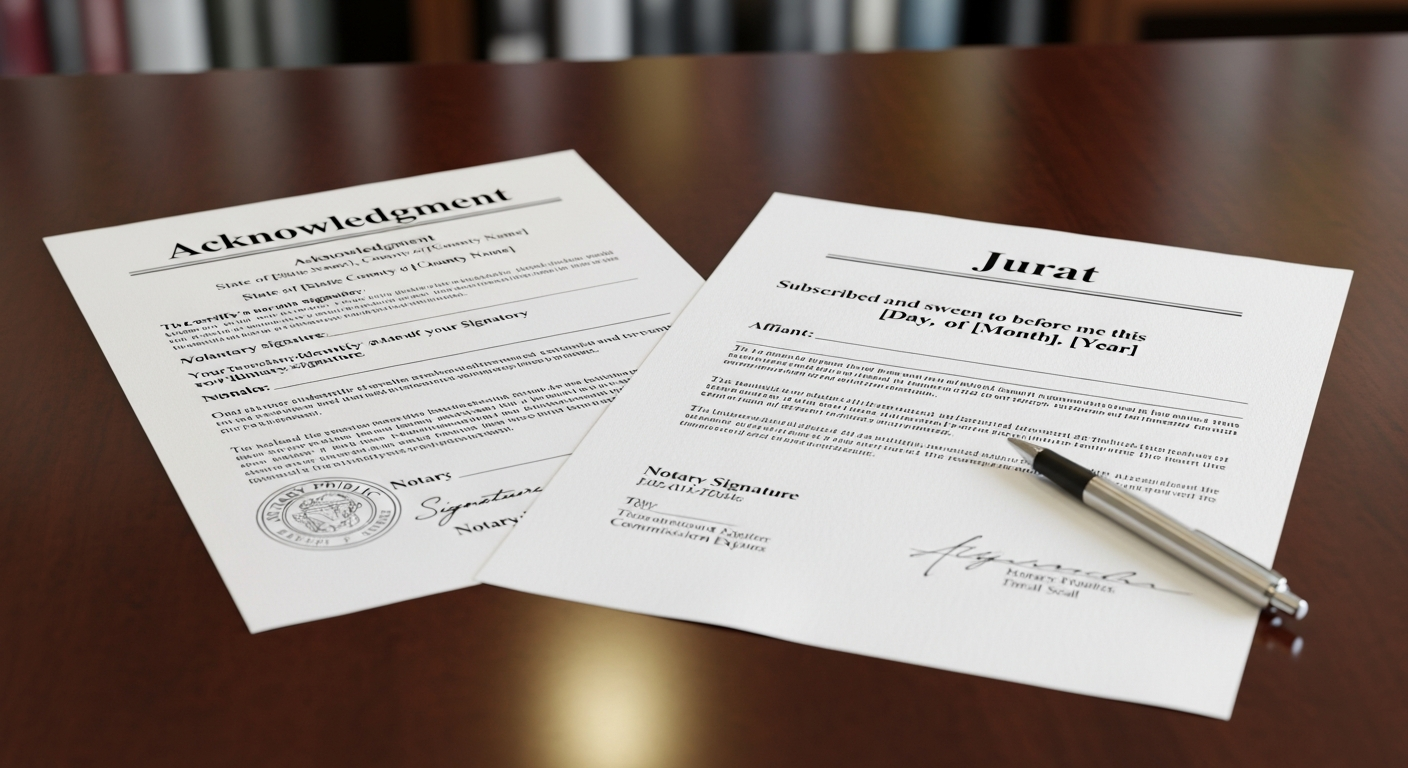
The Difference Between an Acknowledgment and a Jurat
"Which Form Do You Need?"
When you meet a notary, the first thing they might ask is, "Does this document require an Acknowledgment or a Jurat?" If you stare back blankly, don't worry—you're not alone. While notaries cannot choose the form for you (that's the practice of law), we can explain the difference so you can decide.
The Acknowledgment
Purpose: To verify identity and confirm the signer signed voluntarily.
The Act: You acknowledge to the notary, "Yes, I signed this."
Do you need to sign in front of the notary? Technically, no. You can sign it at home, bring it to the notary, and acknowledge it is your signature. (Though signing in front is best practice).
Common Use: Deeds, Trusts, Powers of Attorney, Contracts.
The Jurat
Purpose: To compel truthfulness. It makes the document an affidavit (a sworn statement).
The Act: You raise your right hand and swear or affirm to the notary that the contents of the document are true.
Do you need to sign in front of the notary? YES. You absolutely must sign in the notary's presence. If you signed it at home, you must re-sign it.
Common Use: Affidavits, Sworn Declarations, Passport Applications for children.
Choosing the right certificate is crucial for legal validity.
If your document doesn't have pre-printed notary wording, knowing this difference will save you a call to the receiving agency.
Need Professional Notary Services?
We are available 24/7 to assist you with your important documents. Book online or call us today.
Torrance Notary
Professional mobile notary services serving the entire South Bay area.
- ✓ 24/7 Availability
- ✓ Licensed & Bonded
- ✓ We Come To You